
A Primer on Tornado Safe Room Doors
The average lead-time for tornado warnings is just 13 minutes. People in their homes are often unable to get to a public shelter that quickly, which has enticed many residents to construct their own tornado shelters. Properly installed tornado safe room doors can save lives. Unfortunately, missing a small detail in the product selection or installation process can result in it not being able to withstand the violent debris of a tornado. The main elements of a shelter are the walls and door.
Our aim with this guide is to help with the selection and installation of tornado safe room door assemblies.
Show Me the Label
Standard steel doors are not tornado resistant. Neither are the “storm doors” that are often paired with the front door of a residence.
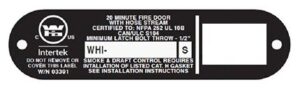
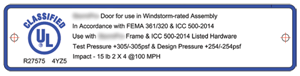
Tornado doors should have a label from a testing agency such as Warnock Hersey or UL showing that the tornado door assembly has been tested in accordance with the requirements of FEMA 320 and ICC 500. Do not accept any other warranty or “safety rating”—the door protecting your family should have a UL or Warnock Hersey label on it that ensures it is a certified product. These are the only two certification agencies that can assure compliance with ICC 500.
Not All Steel Doors Provide Tornado Protection
A common misconception is that any heavy-duty steel door or multi-lock storm door will provide adequate protection during a tornado. In reality, standard steel doors used in residential or commercial construction are not designed to resist tornado debris impacts or extreme wind pressures. Even doors with multiple hinges or locks can fail when exposed to the powerful forces generated during a tornado.
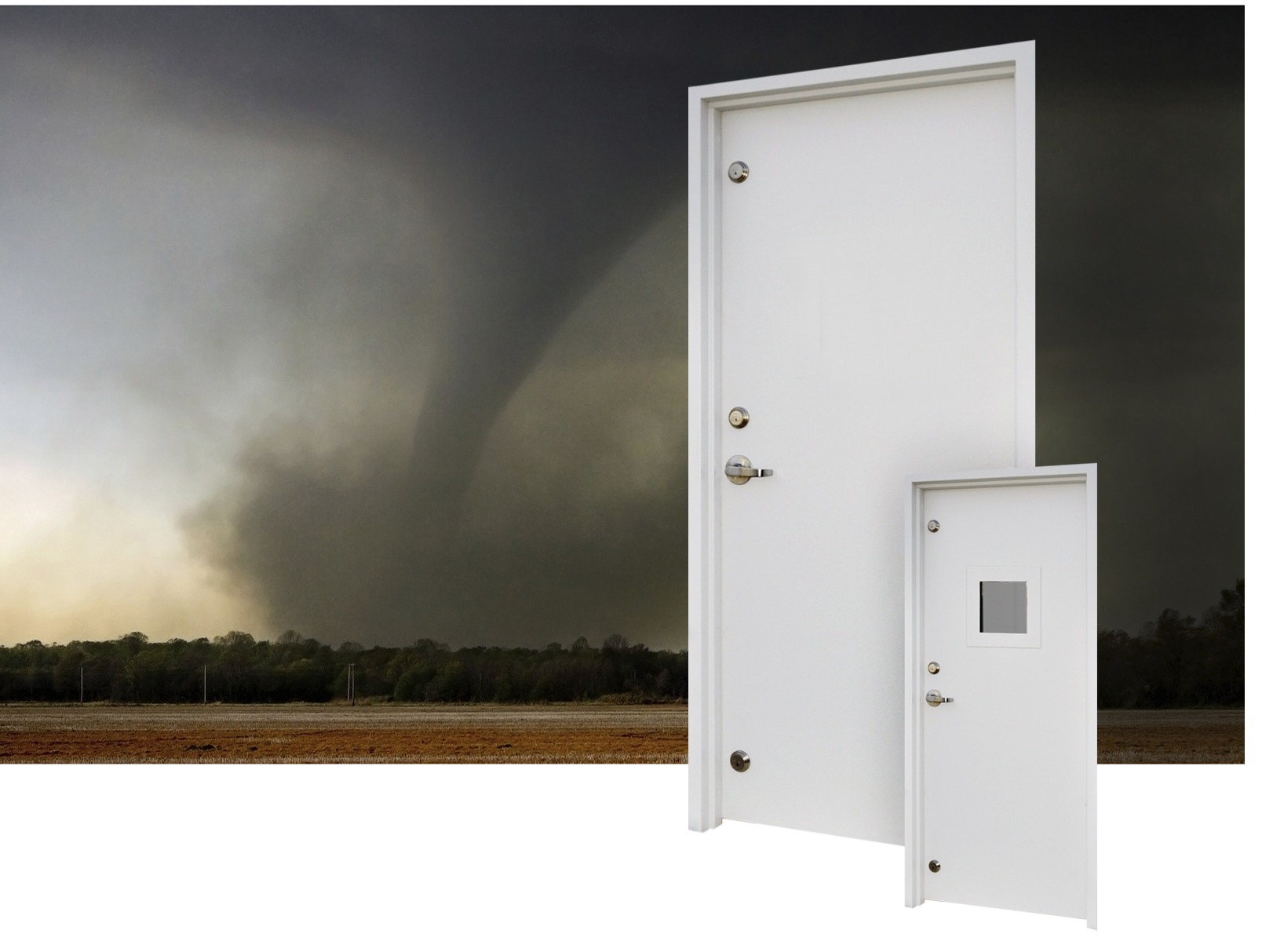
Tornado safe room doors must be specifically engineered and tested to withstand the severe conditions produced by extreme wind events. These assemblies are designed to resist both high wind pressures and wind-borne debris impacts, ensuring the door remains intact and securely closed during a storm. Because the door opening is one of the most vulnerable points of a safe room, selecting the correct tested door assembly is critical to the life-safety performance of the shelter.
Some Assembly Required
Another critical requirement emphasized in safe room guidance is that tornado doors must be installed exactly as they were tested. A tornado safe room door assembly includes:
- The door leaf
- Frame
- Hinges
- Locks and latching hardware
- Anchors connecting the frame to the safe room wall
Each of these components works together as a single tested system. Substituting hardware, changing anchoring methods, or modifying the installation can compromise the assembly’s ability to withstand tornado forces. For this reason, installers should follow the manufacturer’s installation instructions carefully and avoid mixing components from different door assemblies.
Designed to Withstand Extreme Tornado Forces
To meet safe room requirements, tornado-resistant door assemblies must undergo rigorous testing to demonstrate their ability to withstand violent storm conditions. Testing includes resistance to both structural pressure loads and debris impact.
For example, residential safe room doors must be capable of resisting the forces generated by tornado winds up to 250 mph and must pass impact testing that simulates debris striking the door at high speed.
Designed to Withstand Extreme Tornado Forces
To meet safe room requirements, tornado-resistant door assemblies must undergo rigorous testing to demonstrate their ability to withstand violent storm conditions. Testing includes resistance to both structural pressure loads and debris impact.
For example, residential safe room doors must be capable of resisting the forces generated by tornado winds up to 250 mph and must pass impact testing that simulates debris striking the door at high speed.
Contractors Know Best
With the growing popularity of YouTube and online how-to guides, some homeowners take on the challenge of constructing their own tornado shelters. Sadly, this has resulted in preventable catastrophes.
Hire a contractor who is experienced with tornado shelters. If they have not previously worked with shelters but say, “I can build anything,” then you probably do not want to hire them. Even experienced contractors should closely follow all installation instructions provided with the door assembly.
The Facts of Life Safety
Safe rooms are intended to protect occupants during the most severe weather events. However, the effectiveness of the shelter depends heavily on the performance of its weakest components, including the door.
Safe room owners and builders should verify that their doors meet safe room criteria before a storm occurs, rather than waiting until severe weather is imminent. Proper selection, certification verification, and professional installation are all essential steps in ensuring the door will perform as intended when it matters most.
The Federal Emergency Management Agency (FEMA) has published a fact sheet entitled Residential Tornado Safe Room Doors. This document has essential information and resources on these products. Download the FEMA fact sheet.
Note: The Steel Door Institute is a non-profit association and does not sell doors. Please contact a contractor or door distributor to purchase a labeled tornado-resistant door. To ensure your safety, always request a certified door assembly as indicated by the certification label on the hinge edge of the door.